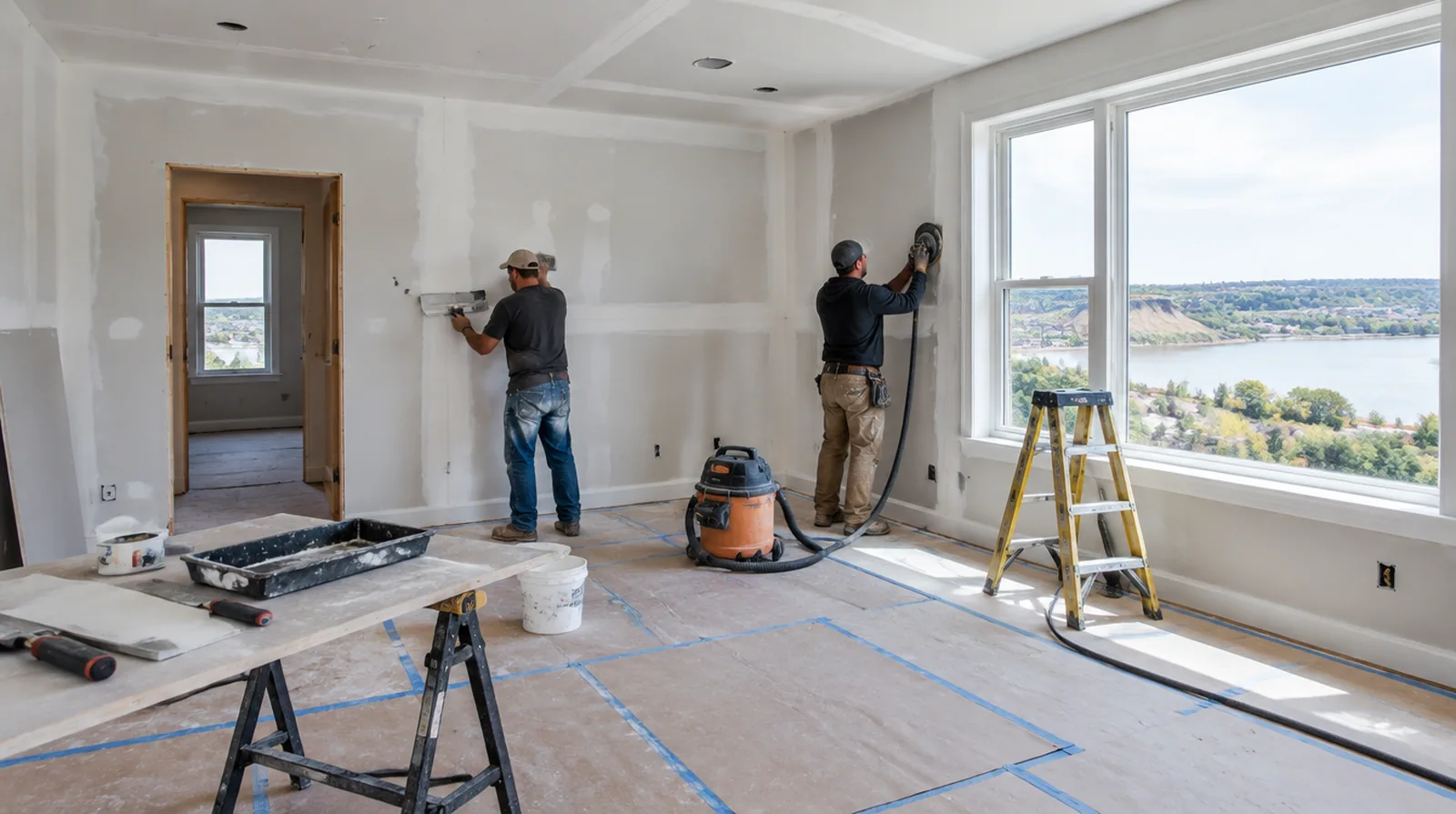
A plan built around the room, not only the patch
A room looks complete when its walls and ceiling support the decoration instead of drawing attention to old damage. Sioux City Drywall Company presents the choices for bluff-side and older home updates in Sioux City, from replacing broken board to refining the finish on a broader surface. The useful starting question is not only how large the mark is. Ask what remains stable, whether moisture is involved and what the final coating will reveal. Those answers help distinguish a small supported patch from work that needs removal or another professional assessment. Decide the intended result before choosing the method, then make the preparation and handover boundaries part of the same written plan.
Ceiling Repair: set the repainting scope
A small fresh white patch can stand out against an older ceiling even when the surface is level. A broader repaint to a logical room boundary can provide a more even decorative result. For this part of the project, assign removal and reinstatement duties for the affected devices before repair access is needed. See the ceiling repair guide for the scope questions, preparation stages and finishing decisions specific to that work.
Soundproof Drywall: consider cavity access
An open partition offers distinct options from a finished wall that must remain largely intact. The estimate should explain what needs removal and how the room will be restored afterward. For this part of the project, measure the affected planes separately so the estimate can explain where each finishing treatment starts and stops. See the soundproof drywall guide for the scope questions, preparation stages and finishing decisions specific to that work.
Drywall Installation: select appropriate panels
Choose sheet thickness and panel properties to suit the specified assembly and the intended location. Moisture resistant board is not a substitute for a required waterproofing system in a wet area. For this part of the project, include a wide room view as well as a close view so scale and surrounding finishes are understandable. See the drywall installation guide for the scope questions, preparation stages and finishing decisions specific to that work.
Skim Coating: choose paint with the finish
A glossy decorative choice may reveal variations that a lower sheen makes less apparent. Discuss the final decorative plan before deciding how extensive the substrate preparation needs to be. For this part of the project, complete the necessary review of concealed work before replacement board closes the opening. See the skim coating guide for the scope questions, preparation stages and finishing decisions specific to that work.
Commercial Drywall: specify the visible finish
A meeting room under strong lighting could need a distinct finish level than a storage room. Set the expected appearance before decoration so prominent spaces are not assessed as though they were storage areas. For this part of the project, compare the total scope rather than assuming the price should follow the hole dimensions alone. See the commercial drywall guide for the scope questions, preparation stages and finishing decisions specific to that work.
Drywall Repair: handle small fastener marks
A bump over a fastener may reflect separation or movement at the panel support. Adding suitable fastening nearby may be necessary before the damaged spot receives finishing compound. For this part of the project, agree containment and cleaning measures before settling the way the room will be staged. See the drywall repair guide for the scope questions, preparation stages and finishing decisions specific to that work.
Popcorn Ceiling Removal: check for painted coatings
Previously painted popcorn texture may resist simple wetting and require a distinct removal approach. A small controlled assessment helps explain labor and potential damage to the supporting surface. For this part of the project, agree containment and cleaning measures before settling the way the room will be staged. See the popcorn ceiling removal guide for the scope questions, preparation stages and finishing decisions specific to that work.
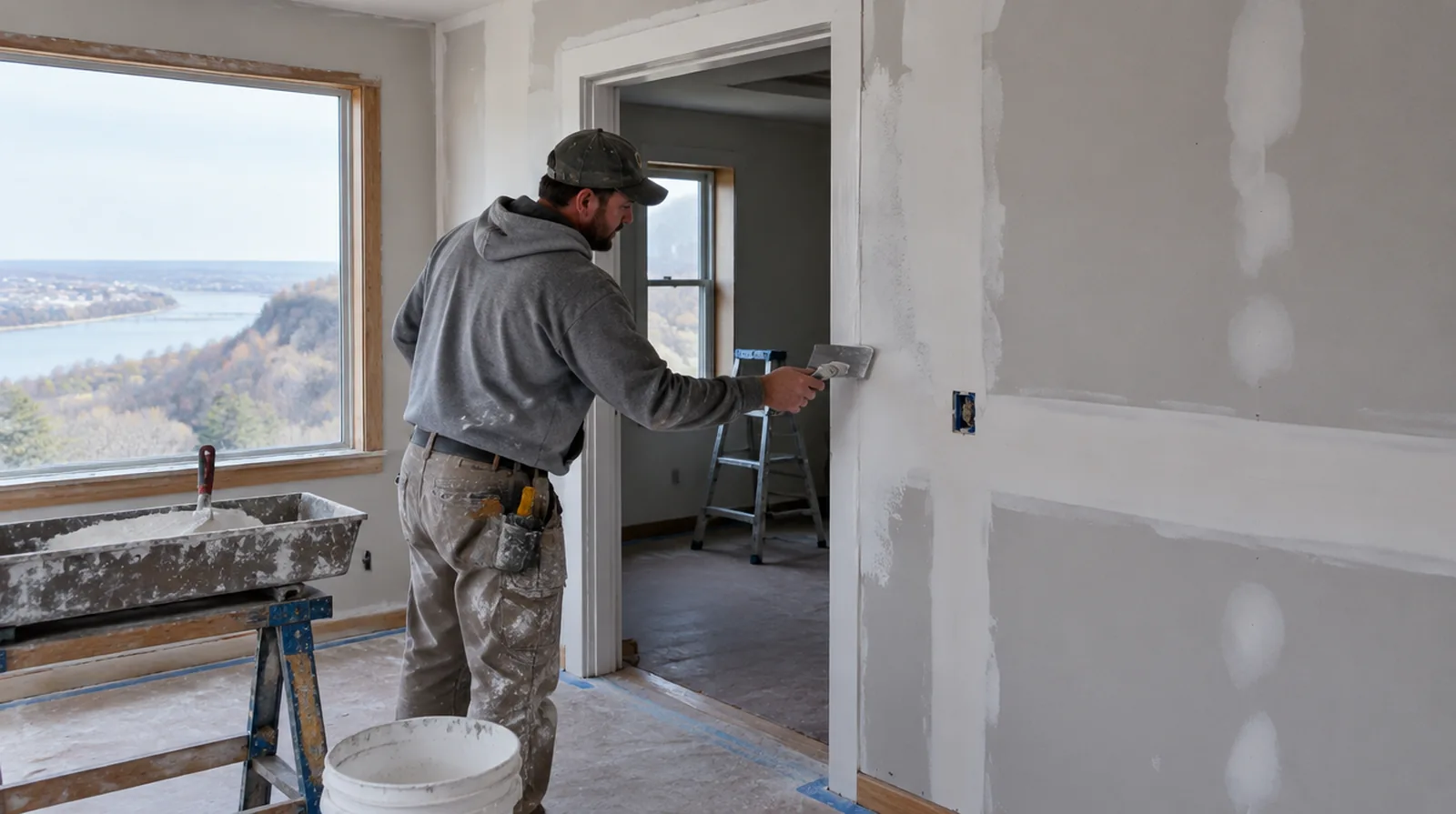
Drywall Finishing: build the seam gradually
Successive coats widen the finished area and soften the transition from joint to board face. Square cut sheet ends need particular care because they do not offer the recess of tapered factory edges. For this part of the project, set a workable boundary around construction while retaining the access people need for normal daily activities. See the drywall finishing guide for the scope questions, preparation stages and finishing decisions specific to that work.
Texture Matching: consider hand applied surfaces
For a troweled pattern, the tool movement and the spacing between its marks matter. A representative trial is useful when there is no standard machine setting that reproduces the original finish. For this part of the project, look at the full plane rather than judging only the narrow strip immediately beside the patch. See the texture matching guide for the scope questions, preparation stages and finishing decisions specific to that work.
Water Damage Drywall Repair: match the board assembly
Use replacement panels consistent with the original thickness and the assembly that must be restored. Water resistant products do not remove the have to correct the conditions that caused the damage. For this part of the project, include a wide room view as well as a close view so scale and surrounding finishes are understandable. See the water damage drywall repair guide for the scope questions, preparation stages and finishing decisions specific to that work.
Access and drying conditions in Sioux City
Every bluff-side and older home updates has practical constraints. Discuss steep streets and detached garages while the rooms can still be assessed together. In a place with very cold winters and humid summers, the conditions inside the work area matter more than an assumed drying schedule. Heating or cooling, airflow and the number of wet finishing coats can all influence when the surface is ready for the next stage. For a project focused on handling cracks from freeze and thaw cycles, leave enough time to verify the underlying condition before covering it. Keeping one room usable may require a staged plan, while an empty property may allow broader protection and more direct material movement.
Compare the same finishing boundary
A meaningful comparison starts with what each proposal actually includes. Ask where damaged material will be removed, what remains in place, how the replacement is supported and what finish is expected before paint. Then check the edges of the scope: protection, disposal, primer, decorative coatings and the handling of fixtures. Those details can explain a price difference that the size of the patch alone does not. If hidden damage is discovered, agree how it will be assessed and documented before more work goes ahead. Clear boundaries are useful for a single room repair and just as important for a larger interior remodel.
Arrange the information before the next step
Start a project record with dimensions, photographs and a short explanation of what changed in the room. Describe visible damage, earlier patching and any known source of moisture. Add access constraints and the desired decorative finish so the eventual assessment covers both the repair and the handover. Do not open a wall or disturb an older texture simply to improve a picture; concealed conditions and material safety need appropriate evaluation. The site contact page shows the address and area map for reference. Use the connected form for project details and keep sensitive information out of your message.
Read about the project approach or view contact and planning details.
More planning details for Sioux City
Ice dams from past winters are a common cause of ceiling stains near exterior walls. A crack that keeps returning in a Sioux City home usually needs to be taped rather than filled again. Older homes in Rose Hill often have plaster walls that need careful blending with new board.